If you have ever looked at a Palm Springs home and thought, this place just feels different, you are not imagining it. Mid-century modern living here is more than a design trend. It is a direct response to the desert, the sunshine, and a lifestyle built around light, air, and easy indoor-outdoor flow. If you are thinking about buying, selling, or simply understanding these iconic homes, this guide will help you see what makes them special and what matters most in the Palm Springs market. Let’s dive in.
Why Palm Springs Defines Mid-Century Modern
Palm Springs is widely recognized for its deep connection to mid-century modern architecture. The city identifies this style as a major part of its architectural history, and local tourism materials describe Palm Springs as almost synonymous with mid-century modern design. That reputation did not happen by accident.
Palm Springs sits on the western edge of the Coachella Valley in the Colorado Desert, with about 350 days of sunshine each year. NOAA climate data for Palm Springs Regional Airport shows a mean annual temperature of 75.6°F, average highs above 108°F in July and August, and only 4.61 inches of annual precipitation. In a place like this, homes had to do more than look good. They had to handle heat, sun, and dry conditions in smart ways.
That climate helped shape the local version of modernism. Architects such as Albert Frey, Donald Wexler, E. Stewart Williams, William F. Cody, Richard Neutra, and Charles Du Bois helped define a style that worked beautifully in the desert. Today, events like Modernism Week keep that design legacy front and center and continue to reinforce Palm Springs as a destination for architecture lovers.
What Mid-Century Modern Looks Like
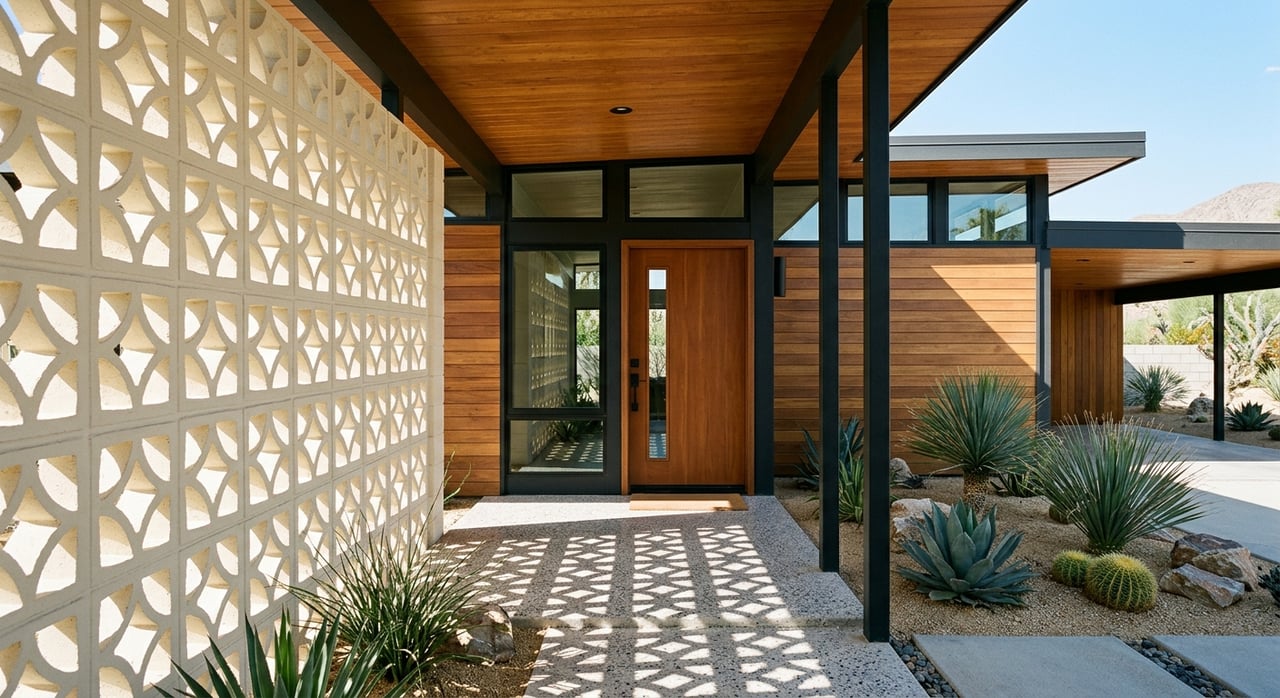
In Palm Springs, mid-century modern homes are often easy to spot once you know what to look for. The style typically features clean lines, broad flat planes, large windows, open interiors, and low or flat rooflines with wide overhangs. The overall effect is simple, airy, and visually connected to the landscape.
Many homes are one or two stories with a strong horizontal feel. You may also see clerestory windows, sliding glass doors, unadorned wall surfaces, concrete block details, and in some cases, dramatic butterfly roofs. These details were not just stylistic choices. They were practical ways to manage sunlight, airflow, and everyday comfort.
Palm Springs became a major center for this architecture after World War II, when efficiently built and moderately priced homes became more important. The city’s historic context notes that mid-century modern design became the predominant postwar style here and appeared across many property types. That is one reason the style feels so woven into the local identity.
Why Indoor-Outdoor Living Matters
One of the biggest reasons people love mid-century modern living in Palm Springs is the seamless connection between inside and outside. This is not just about having a patio or pool. It is about how the whole house is planned.
Large expanses of glass, sliding doors, and open floor plans create long sightlines and make outdoor areas feel like part of the living space. Rooms often face patios, courtyards, or pools, which helps the home feel bigger, brighter, and more relaxed. In Palm Springs, that kind of layout fits the climate and the lifestyle.
The city’s historic materials point out that local modern design adapted to desert conditions with sun-shading screens that still allowed airflow. In other words, these homes were built to balance openness with protection from intense sun. That blend of style and function is still one of the strongest selling points for buyers today.
The Landscape Is Part of the Design
In Palm Springs, the home itself is only part of the picture. The surrounding site, hardscape, and planting choices all shape the way a property lives and feels. That is especially true with mid-century modern homes, where architecture and landscape are meant to work together.
The city’s general plan encourages native desert plants, drought-tolerant species, pest-resistant landscaping, low-maintenance materials, and shade along streets and sidewalks. That makes practical sense in a climate with very little rainfall and extreme summer heat. It also supports the clean, sculptural look that so many buyers want in a desert property.
When you tour or market a Palm Springs mid-century home, it helps to think beyond finishes and square footage. The real appeal often comes from the relationship between the house, the lot, the mountain views, the shaded outdoor space, and the way the property handles sun and privacy throughout the day.
Palm Springs Areas Known for the Style
Several Palm Springs neighborhoods are especially well known for mid-century modern homes. Local tourism materials highlight Racquet Club Estates, Vista Las Palmas, Twin Palms, and Deepwell Estates as iconic areas tied to the city’s architectural identity.
Racquet Club Estates is often noted for post-and-beam construction, soaring rooflines, clerestory windows, and open floor plans that blur the line between indoors and outdoors. In other areas, you may find different takes on the same core principles, including low-slung forms, strong geometry, and a close connection to the site.
For buyers, these neighborhood names can help narrow your search if architectural style is a top priority. For sellers, being able to clearly position a home within Palm Springs’ design story can strengthen marketing and help buyers understand what makes a property stand out.
Buying an Older Mid-Century Home
If you are buying a mid-century modern home in Palm Springs, design is only part of the decision. You also want to understand how the home has aged, what has been updated, and whether the property has any formal historic designation.
That last point matters. Not every older home is historically designated, and age alone does not mean a property is subject to the same rules or benefits as a formally recognized historic home. Palm Springs provides official resources for historic sites and districts, along with guidance on buying, selling, and altering historic properties.
Some designated properties may also be eligible for Mills Act contracts, which the city says can offer potential property tax relief in exchange for a minimum 10-year preservation commitment. If you are considering a home with historic status, it is worth understanding both the opportunities and the responsibilities before you move forward.
Desert Performance Matters More Than Cosmetic Updates
A beautiful kitchen or stylish furniture can catch your eye, but in Palm Springs, long-term comfort often comes down to the building envelope. Windows, roofs, insulation, and shading can have a major impact on how a mid-century home performs in the desert.
The U.S. Department of Energy says windows account for 25% to 30% of residential heating and cooling energy use. In warm climates, low solar heat gain coefficient windows are recommended, and properly installed low-e storm windows can save 12% to 33% on heating and cooling costs depending on the existing window. ENERGY STAR also notes that air sealing and insulation can reduce annual energy bills by up to 10%.
Roofs and attics deserve close attention too, especially on homes with flat or low-pitched roofs. According to the Department of Energy, cool roofs reflect more sunlight, can stay more than 50°F cooler than conventional roofs in the same sun, and may extend roof service life. Radiant barriers can also be especially effective in hot, sunny climates and may reduce cooling costs by 5% to 10% in some studies.
For buyers, this means inspections and due diligence should go beyond surface appeal. For sellers, it means that thoughtful improvements tied to comfort and efficiency may resonate more strongly than cosmetic changes alone.
Preserving Character While Improving Comfort
One of the most common challenges with Palm Springs mid-century homes is finding the right balance between preservation and performance. Buyers often want original character, but they also want comfort, durability, and manageable utility costs.
That tension is normal in this market. A home may have original design elements that give it true architectural appeal, while also needing upgrades that better support desert living. The goal is not always to make the home feel brand new. Often, it is to improve how the home works while respecting what makes it special.
If you are buying or selling one of these properties, that balance should shape your strategy. Clear information about designation status, major system updates, window performance, roofing condition, and landscape efficiency can help everyone make more confident decisions.
Why These Homes Hold Lasting Appeal
Mid-century modern homes in Palm Springs continue to attract attention because they offer more than nostalgia. They combine design history, climate-smart features, and a lifestyle that feels open and relaxed. In the right setting, they can feel both timeless and highly livable.
That is why these homes continue to draw second-home buyers, lifestyle-driven buyers, and owners who value architecture as much as location. They offer a strong sense of place. In Palm Springs, that matters.
Whether you are searching for the right property or preparing to sell a home with architectural character, local knowledge makes a difference. Understanding how style, condition, historic status, and desert performance come together can help you make a smarter move. If you are ready to talk through your Palm Springs real estate goals, connect with Alejandro Perez Munoz for experienced, responsive guidance.
FAQs
What makes Palm Springs mid-century modern homes unique?
- Palm Springs mid-century modern homes stand out because they combine clean architectural lines with climate-responsive features like shade, airflow, large glass openings, and strong indoor-outdoor living.
What features should you look for in a Palm Springs mid-century home?
- Common features include flat or low-pitched roofs, wide eaves, clerestory windows, sliding glass doors, open floor plans, horizontal lines, concrete block details, and strong connections to patios or pool areas.
Are all older Palm Springs homes historically designated?
- No. A home can be older or vintage without being formally designated as a historic site or located in a historic district, so buyers should verify a property’s official status with city resources.
What should buyers check in a Palm Springs mid-century property?
- Buyers should pay close attention to windows, roof condition, insulation, shading, airflow, and landscaping efficiency, since these factors can strongly affect comfort and operating costs in the desert.
Why is indoor-outdoor living so important in Palm Springs?
- Indoor-outdoor living is central in Palm Springs because the architecture was designed to respond to the desert climate through patios, glass walls, shaded spaces, and layouts that connect the home to the site.
Can a historic Palm Springs home offer tax benefits?
- Some formally designated historic properties may qualify for a Mills Act contract, which Palm Springs says can provide potential property tax relief in exchange for a minimum 10-year preservation commitment.